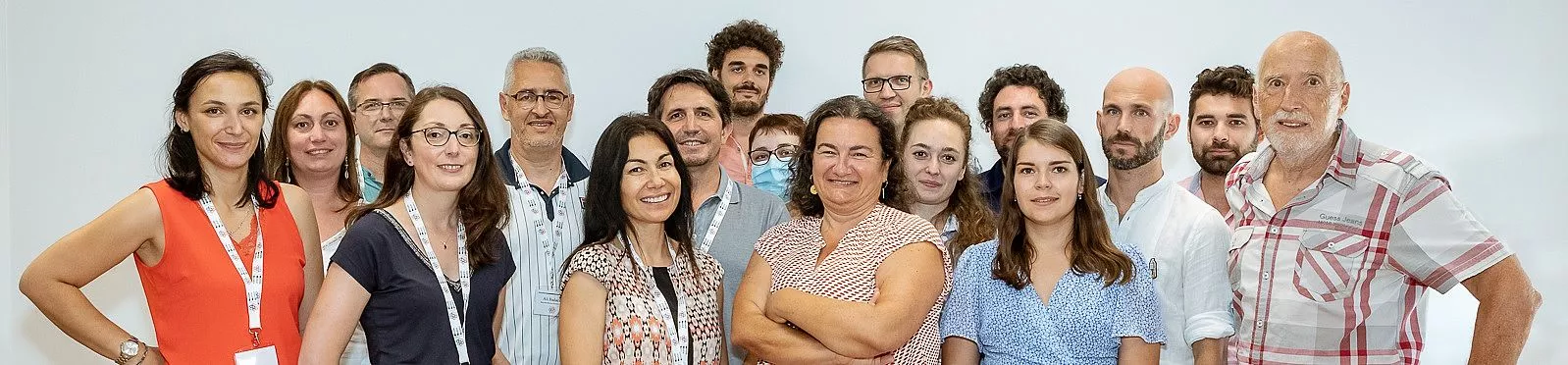
Epigenetic and nucleoskeleton dynamics in rare diseases
Team leader: Dr. Frederique Magdinier, DR1 INSERM (Lab director)
Associate team leader: Pr. Patrice Roll, PU-PH; AMU-AP-HM (Head of the Cell Biology Dpt, La Timone)
Structuration, strategy and scientific objectives
By taking advantage of a wide range of expertise and technical skills with pre-clinical in vitro and in vivo models, we propose to:
o Investigate the molecular cause and molecular mechanisms of selected rare diseases; in particular diseases characterized by epigenetic alterations;
o Identify potential druggable pathways and therapeutic targets;
o Ameliorate healthcare for patient suffering of rare genetic diseases;
The cell nucleus encloses, organizes and protects the genome, structured as chromatin which architecture is dynamically regulated depending on its activity during the cell cycle or differentiation processes. The shape of the nucleus and its mechanical stability are dependent on both the rigidity provided by the chromatin and the interactions of the nuclear membrane and nuclear membrane spanning proteins with the nuclear lamina and the cytoskeleton. The contractile state of cells like vascular smooth muscle cells (VSMCs) or skeletal muscle cells (SkMCs), impacts mechanically on the nucleus. Thereby, nuclear structure adapts to cell shape by still partially uncharacterized mechanisms that contribute to the organization of chromatin within the nuclear space and to its regulation.
Nuclear proteins such as Lamins and associated proteins regulate chromatin and epigenetic marks by modulating and maintaining heterochromatin and chromosomal domains through interactions with transcription factors and chromatin binding proteins. In response to external cues, including mechanical transduction, this “chromatin-nuclear membrane-cytoskeleton” backbone participates in most DNA transactions such as DNA replication, transcription or response to DNA damage.
Alterations in chromatin organization as well as modifications of the nuclear shape are hallmarks of many pathologies including several rare genetic diseases such as FacioScapuloHumeral dystrophy (FSHD) or premature ageing syndromes (PAS).
Through the exploration of patient’s samples together with the development of in vitro and in vivo models, our projects will address fundamental questions aimed at understanding the chromatin-nucleus-cytoskeleton interplay, identifying key actors involved in this dynamic and the cross-talks between chromatin organization, nuclear structure in rare genetic diseases.
Our project is divided along two main axes:
Axis 1: delineate the molecular causes and molecular mechanisms of selected rare diseases, by focusing on epigenetic alterations.
Axis 2: identify pathways underlying dysregulated chromatin-nucleus-cytoskeleton interplay in cells undergoing mechanical stress.
The team is organized in a cohesive manner so that expertise, technologies and resources can be shared and efficiently mobilized.